
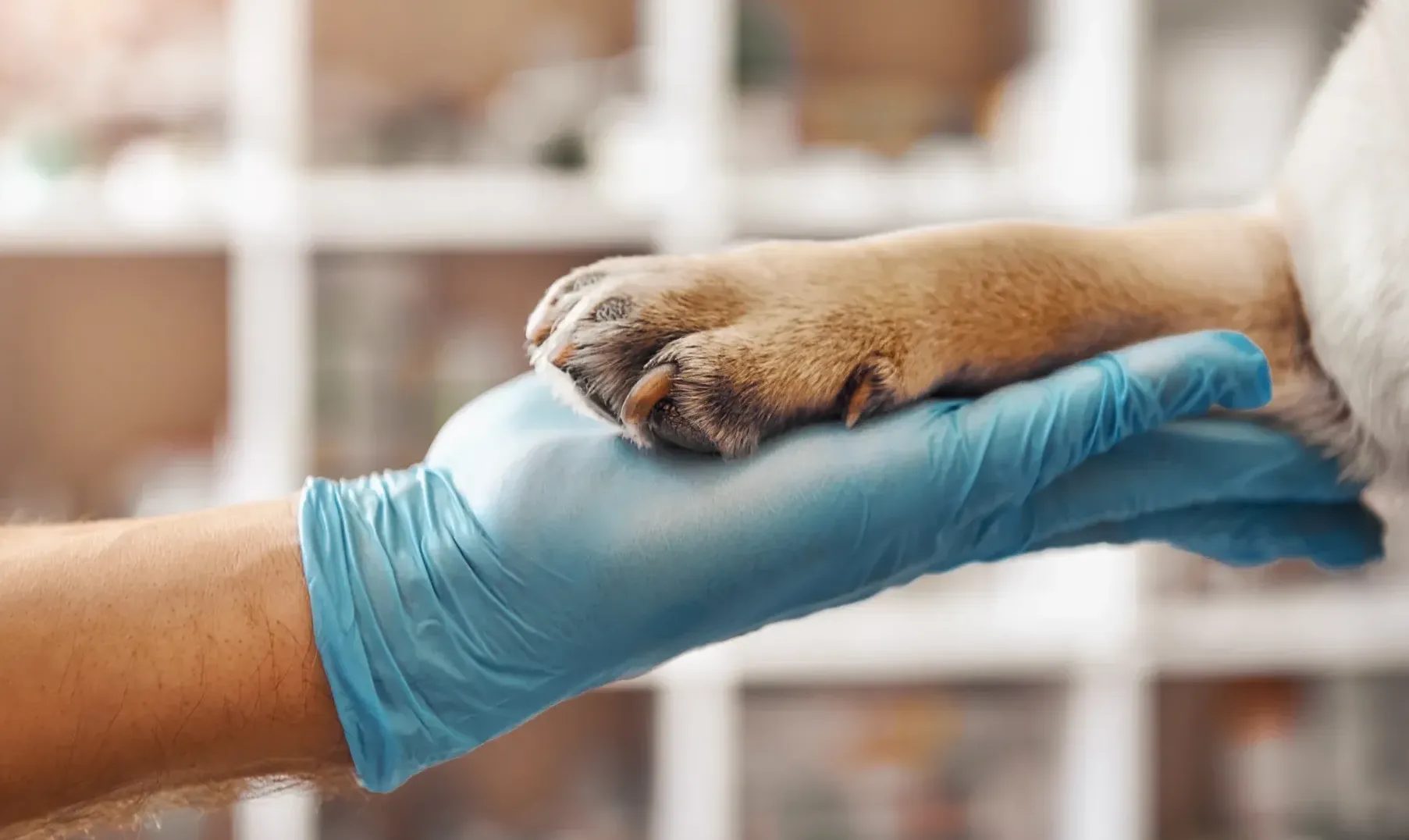
Pet ACL Repair in Warren: Expert Surgical Care for Your Dog
Pet ACL repair in Warren is available at Troy & Heights Animal Hospital, where our veterinary surgeons perform TPLO, TTA, and lateral suture procedures to stabilize your dog's knee, relieve pain, and restore mobility. Call (248) 457-1985 to schedule a consultation.
Understanding Pet ACL Repair in Warren: What Every Dog Owner Should Know
When your dog limps or holds up a back leg, a torn cranial cruciate ligament (CCL)—often called the ACL—is a common cause. This ligament stabilizes the knee (stifle) joint, and a tear leads to pain, instability, and arthritis if left untreated. Here's what you need to know.
- Recognize the signs – Sudden lameness, difficulty rising, swelling, or a 'clicking' sound when walking can indicate a CCL tear.
- Get a diagnosis – Our veterinarians perform a physical exam and may recommend X-rays or advanced imaging to confirm the tear and assess joint health.
- Understand why surgery is often recommended – Without surgical repair, the joint remains unstable, leading to chronic pain, muscle loss, and progressive arthritis. Surgical repair is the best path to long-term stability and pain relief.
- Explore your options – Depending on your dog's size, age, and activity level, we may recommend TPLO, TTA, or lateral suture. Each has pros and cons, which we'll explain in detail.
- Plan for recovery – Post-surgery, your dog needs strict rest, physical therapy, and gradual return to activity. We'll guide you through every step.
If you notice any signs of a knee injury, don't wait. Early intervention can prevent further damage and improve outcomes. Contact our team at Troy & Heights Animal Hospital—we serve pets from Warren, Troy, Sterling Heights, and nearby areas.
Comparing ACL Surgery Options for Your Pet in Warren: TPLO, TTA, and Lateral Suture
Choosing the right surgery for your dog's torn ACL is a big decision. Here's a breakdown of the most common procedures, so you can discuss them with your veterinarian.
| Procedure | How It Works | Best For | Pros | Cons |
|---|---|---|---|---|
| TPLO (Tibial Plateau Leveling Osteotomy) | Changes the angle of the tibial plateau to neutralize the forces that cause the knee to slip. | Large or active dogs, overweight dogs, chronic tears | High success rate, faster return to function, reduces arthritis progression | More invasive, higher cost, longer surgery time |
| TTA (Tibial Tuberosity Advancement) | Advances the tibial tuberosity to change the pull of the patellar tendon, stabilizing the joint. | Medium to large dogs, certain conformations | Good success rate, less bone cutting than TPLO | Requires specific implant, may not be suitable for all dogs |
| Lateral Suture (Extracapsular repair) | Places a suture outside the joint to mimic the ligament's function. | Small to medium dogs, less active dogs, cats | Less invasive, lower cost, shorter surgery time | Not as strong as TPLO/TTA, may stretch or break, not ideal for large dogs |
Each technique has its place. Your veterinarian will recommend the best option based on your dog's size, age, activity level, and the severity of the tear. For example, a 70-pound Labrador may benefit more from TPLO, while a 15-pound terrier might do well with a lateral suture.
At Troy & Heights Animal Hospital, we perform all three procedures. We'll help you weigh the pros and cons and make an informed choice. If you're considering pet ACL repair in Warren, schedule a consultation to discuss which surgery is right for your dog.
Cost and Value of Pet ACL Repair in Warren: Is Surgery Worth It?
The cost of dog ACL surgery varies widely based on several factors. Here's what influences the price and why surgery is often worth the investment.
| Factor | Why It Matters | Typical Range (General) |
|---|---|---|
| Procedure type | TPLO is more complex and uses specialized implants, making it more expensive than lateral suture. | Varies; TPLO is higher than lateral suture |
| Dog's size and weight | Larger dogs require more anesthesia, implants, and surgical time. | Increases with size |
| Diagnostics | X-rays or advanced imaging before surgery add to the cost. | Varies |
| Medications and aftercare | Pain meds, antibiotics, and follow-up visits are part of the total. | Varies |
| Geographic location | Prices differ by region and clinic. | Varies |
While the upfront cost can be significant, untreated ACL tears often lead to chronic pain, arthritis, and decreased quality of life. Surgery offers the best chance for your dog to return to normal activity. For many owners, the long-term benefit outweighs the cost. If you're concerned about affordability, ask us about payment options—we're here to help.
Can a dog live with a torn ACL without surgery? Yes, but it's not ideal. Non-surgical management (rest, weight control, anti-inflammatories) may help small, inactive dogs, but large or active dogs often develop severe arthritis and persistent lameness. Surgery is usually the best path to long-term stability and pain relief.
Recovery After Pet ACL Repair in Warren: A Week-by-Week Guide
A successful recovery depends on your commitment to post-operative care. Here's a general timeline to expect after your dog's ACL surgery.
- The First Two Weeks: Immediate Post-Op Care – Keep your dog confined to a small, quiet space. Use a leash for bathroom breaks. Administer all medications as prescribed. Watch for swelling, discharge, or excessive licking. Ice packs can help reduce swelling.
- Weeks 3 to 8: Building Strength Slowly – Begin short, controlled walks on a leash. Avoid running, jumping, or stairs. Start physical therapy exercises like passive range-of-motion and gentle massage. Your vet may recommend hydrotherapy or rehabilitation.
- Weeks 9 to 12: The Home Stretch – Gradually increase exercise duration. Your dog can start off-leash activity in a fenced yard, but still avoid high-impact play. Recheck with your vet to assess healing. Most dogs return to normal activity by 12 weeks, but full healing can take 6 months.
Every dog heals at their own pace. Follow your vet's instructions closely and attend all follow-up appointments. If you have any concerns during recovery, don't hesitate to call us.
Tibial-plateau-leveling osteotomy
Tibial-plateau-leveling osteotomy, or TPLO, is a surgical technique used to stabilize a dog's knee after a cranial cruciate ligament rupture. The procedure involves cutting and rotating the tibial plateau—the top surface of the shin bone—to change its angle, typically to about 5 degrees from horizontal. This alteration eliminates the abnormal sliding of the femur on the tibia, providing stability without relying on the damaged ligament. TPLO is particularly effective for large, active dogs and has a high success rate. It addresses the root cause of instability, reducing pain and slowing the progression of arthritis. If your dog has suffered a CCL tear, TPLO may be the best option to restore mobility and quality of life.
Directions to our veterinarian near me from Columbia Center
Start at Columbia Center and head to Troy & Heights Animal Hospital at 1985 E Wattles Rd, Suite F, Troy, MI 48085.
Risks and Success Rates of Pet ACL Repair in Warren
Like any surgery, ACL repair carries some risks, but the success rate is high. Understanding potential complications helps you make an informed decision.
A good fit if…
- Your dog is otherwise healthy and a good anesthetic candidate.
- You can commit to post-operative care and rehabilitation.
- You want to prevent long-term arthritis and pain.
Consider another option if…
- Your dog has severe underlying health issues that increase surgical risk.
- You cannot provide the necessary aftercare.
- Your dog is very small or inactive, and non-surgical management might be an option.
Common risks include surgical site infections, implant-related issues, and late meniscal tears. However, with proper technique and aftercare, these are uncommon. Our team takes every precaution to minimize risks. We'll discuss your dog's specific risk factors during the consultation.
Pet ACL Repair in Warren: Schedule a Consultation at Troy & Heights Animal Hospital
Ready to take the next step? Here's how to get started with us.
- Call us – Dial (248) 457-1985 to schedule an appointment. We're open Mon–Fri 9 AM–6 PM and Sat 9 AM–3 PM.
- Visit our clinic – We're located at 1985 E Wattles Rd, Suite F, Troy, MI 48085, just a short drive from Warren and nearby communities.
- Meet our team – Dr. Sanchez Barba and our staff will examine your pet, review diagnostics, and discuss the best surgical plan.
- Get a personalized plan – We'll provide a detailed cost estimate and answer all your questions.
- Book your surgery – Once you're ready, we'll schedule the procedure and guide you through pre-op instructions.
New clients can claim a free first exam (terms apply). We serve pets from Troy, Sterling Heights, Rochester Hills, Warren, Madison Heights, Berkley, Birmingham, and surrounding areas. Don't wait—early treatment leads to better outcomes.
For details on services and visits, see the main page about veterinarian near me.
Sources
Also asked as
- ACL surgery for dogs in Warren
- Dog knee surgery near Warren MI
- CCL repair for pets in Warren
Frequently asked questions
Can a dog live with a torn ACL without surgery?
Yes, but it's not recommended for most dogs. Without surgery, the joint remains unstable, leading to chronic pain, muscle atrophy, and progressive arthritis. Non-surgical management (rest, weight control, anti-inflammatory medications) may work for small, inactive dogs, but large or active dogs typically require surgery to regain full function.
How much does ACL surgery cost for your dog?
The cost varies widely depending on the procedure type, your dog's size, geographic location, and whether additional diagnostics are needed. Generally, lateral suture is less expensive than TPLO or TTA. We recommend scheduling a consultation for a personalized estimate.
What is TPLO surgery in dogs?
TPLO (Tibial Plateau Leveling Osteotomy) is a surgical procedure that changes the angle of the tibial plateau to eliminate the need for the cranial cruciate ligament. It's highly effective for large and active dogs, offering a faster return to function and reduced arthritis progression compared to other techniques.
What is a CCL tear in a dog's back leg?
A CCL (cranial cruciate ligament) tear is a common knee injury in dogs, analogous to an ACL tear in humans. It causes instability, pain, and lameness. It can occur suddenly or gradually due to degeneration. Surgery is often recommended to restore stability and prevent arthritis.
Should I put my dog down if I can't afford ACL surgery?
No, there are alternatives. Non-surgical management may help some dogs, though it's less effective for large breeds. You can also discuss payment plans, care credit, or fundraising options with your veterinarian. Euthanasia is not the only option—many owners find a way to manage the condition.